
traditionally dutch! Sint MAARTEN
Sint Maarten is celebrated every year on 11 November in the Netherlands, Belgium and the Dutch Caribbean island of Sint Maarten. The celebration is also known in countries such as France, Germany, Hungary and Poland.
Although the holiday has religious origins, most Dutch people today celebrate Sint Maarten as a cultural tradition rather than a religious event.
This article explains how Sint Maarten is celebrated in the Netherlands and why it remains a special day for many Dutch children.

WHO IS SINT MAARTEN?
Sint Maarten, also known as Martin of Tours, was born around the year 316 in what is now Hungary. At the age of fifteen, he became a soldier in the Roman army and was later stationed in France.
One cold winter day, Martin arrived at the city gates of Amiens and saw a poor beggar who was freezing in the cold. Without hesitation, he cut his cloak in half and gave one half to the beggar so he could stay warm.
Martin could only give away half of his cloak because the other half officially belonged to the Roman army.
That night, Martin dreamed that Jesus was wearing the half cloak he had given away. He saw this as a sign from heaven. Soon afterwards, he left the Roman army, was baptised and became a priest dedicated to helping the poor.
Later, Martin became the Bishop of Tours. After his death, he was declared a saint and became known as Sint Maarten.
His act of sharing with someone less fortunate forms the foundation of the Dutch Sint Maarten tradition.
Woordenschat
To help you prepare for Sint Maarten it could be beneficial to learn the below words!
Nederlands |
Engels |
| De soldaat | The soldier |
| Het leger | The army |
| Frankrijk | France |
| De stadspoort | The city gate |
| De bedelaar | The beggar |
| De mantel | The cloak |
| De hemel | The heaven |
| De armen | The poor |
| De lampion | The lantern |
| De kaars | The candle |
| De liedjes | The songs |
| Het snoepgoed | The sweets / candy |
practise your dutch
-
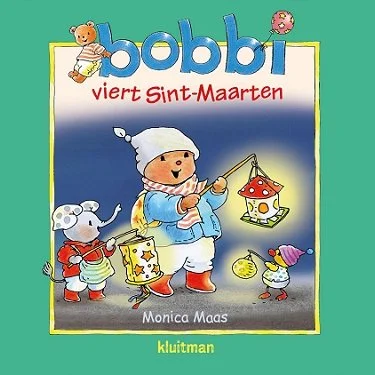
bobbie viert sint maarten (easy dutch story book)
-

TESSEL VIERT SINT MAART (DUTCH story book)
-

sint maarten liedjes (dutch songs)
-

LICHTJES VOOR SINT MAARTEN (DUTCH STORY BOOK)
WHAT DO THE DUTCH DO FOR SINT MAARTEN?
Sint Maarten is celebrated on 11 November, the day on which Martin died. While the celebration originally had a strong religious meaning, it is now mainly a cultural tradition in the Netherlands.
When it becomes dark outside, Dutch children walk through their neighbourhood carrying colourful lanterns. They go from door to door singing traditional Sint Maarten songs.
Originally, these lanterns were made by hollowing out turnips or sugar beets and placing a candle inside. Today, most children make paper lanterns at school in the days leading up to the celebration.
After singing a song, children receive sweets and treats from the people whose doors they visit.
Traditionally, the children symbolise the poor beggar that Martin helped. By giving sweets to the children, people symbolically share their wealth with others.
According to the tradition, children should not keep all of the sweets they collect. They are encouraged to share part of their treats with those who have less. In this way, they relive the kindness and generosity shown by Sint Maarten many centuries ago.
Source Schooltv.nl
Did you struggle to understand this video and would you like help with learning the Dutch language? Dutch 4 Beginners can help you!
IS THIS THE DUTCH VERSION OF HALLOWEEN?
Halloween originally developed in Ireland and Scotland before being brought to North America, where it eventually became the celebration we know today.
Since the 1990s, Halloween has also become increasingly popular in the Netherlands. However, it is still nowhere near as widely celebrated as it is in the United States.
Dutch children generally do not go trick-or-treating. Instead, Halloween is often used as an excuse to dress up and attend costume parties at schools, sports clubs and other social events.
There are clear similarities between Halloween and Sint Maarten. Both involve children going door to door and both take place during the darker months of the year.
Perhaps some of the traditions have become mixed together over time.
What do you think?