
traditionally dutch! Dutch kissing couple
If you ever visit the Netherlands and step into a souvenir shop, you will almost certainly see them: the famous Dutch kissing couple.
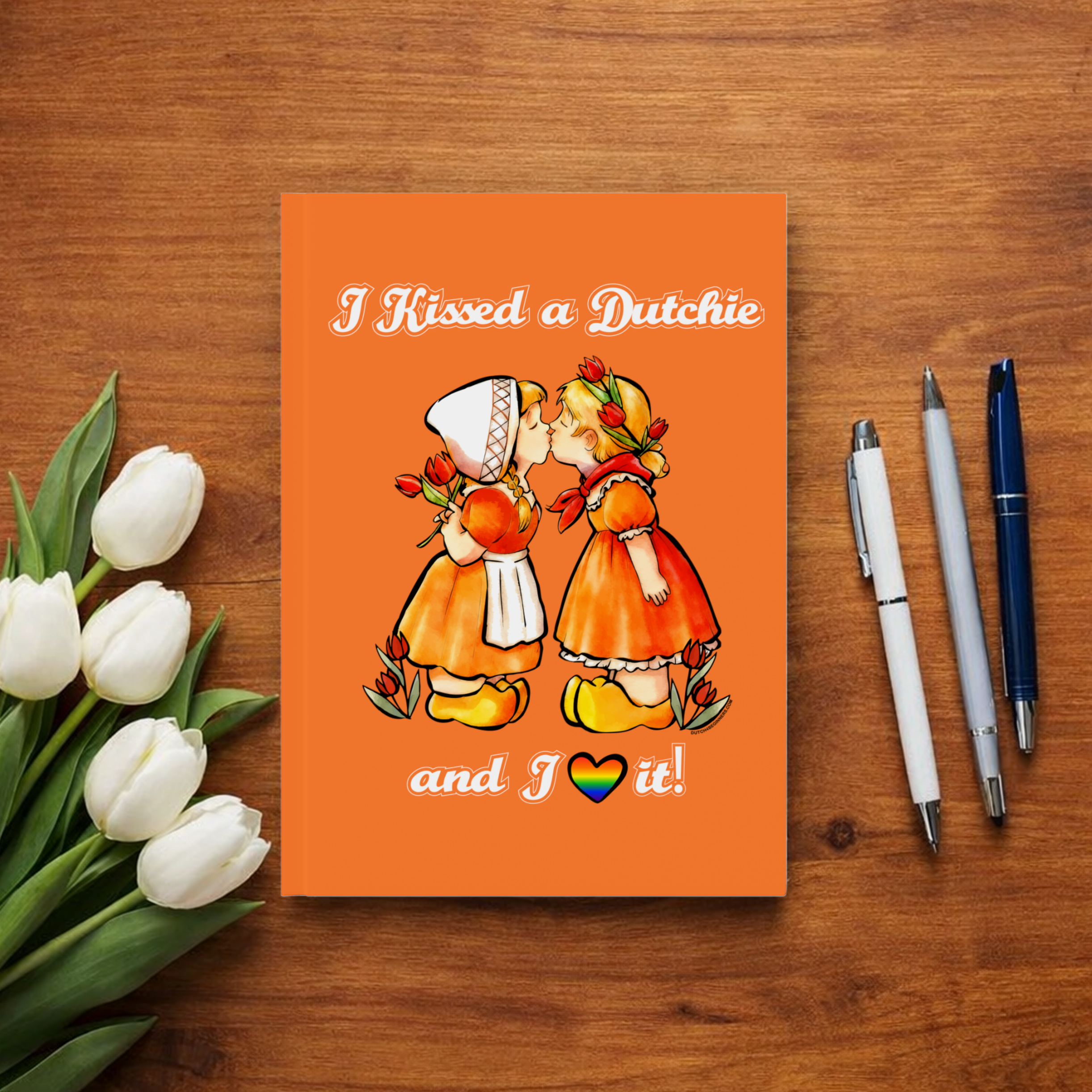
The couple usually consists of a young Dutch boy and girl dressed in traditional Dutch clothing, sharing a gentle kiss. It is one of the most recognisable symbols of the Netherlands and is known by people all over the world.
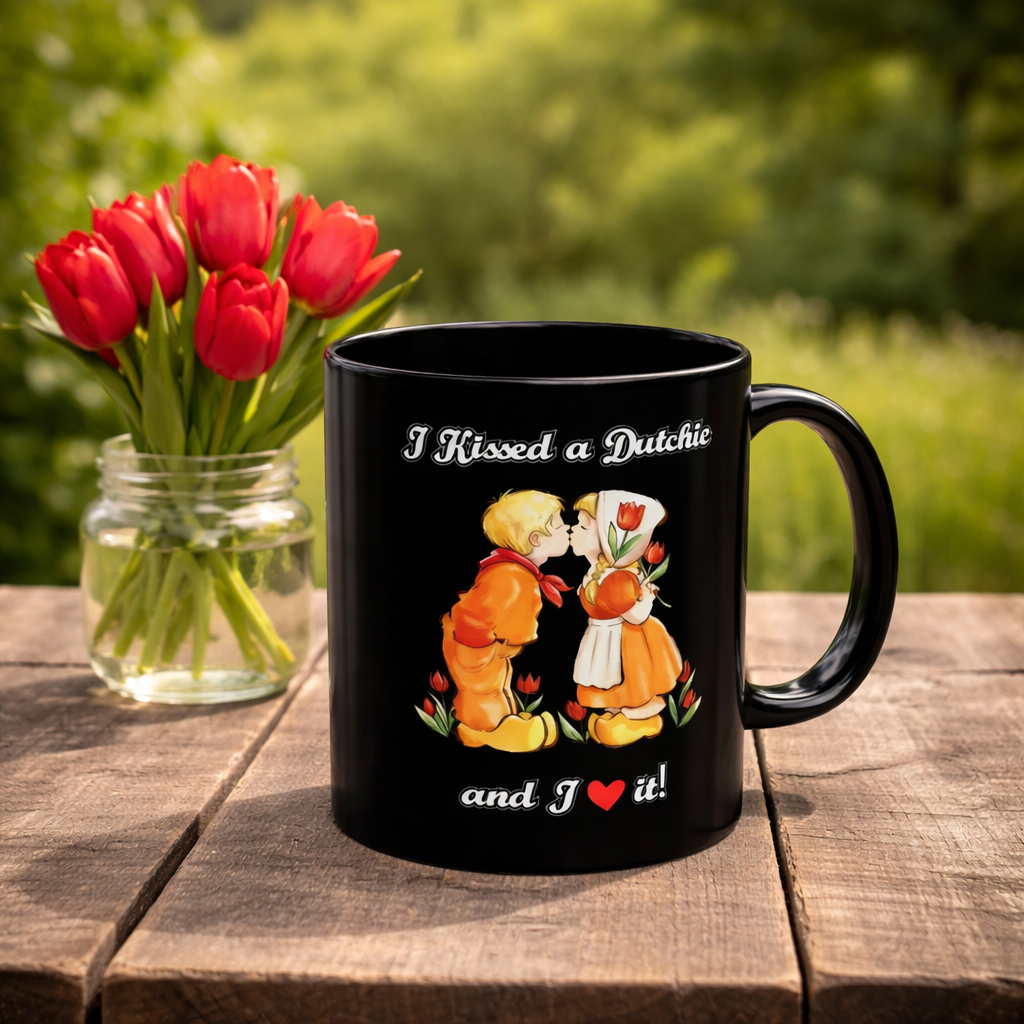
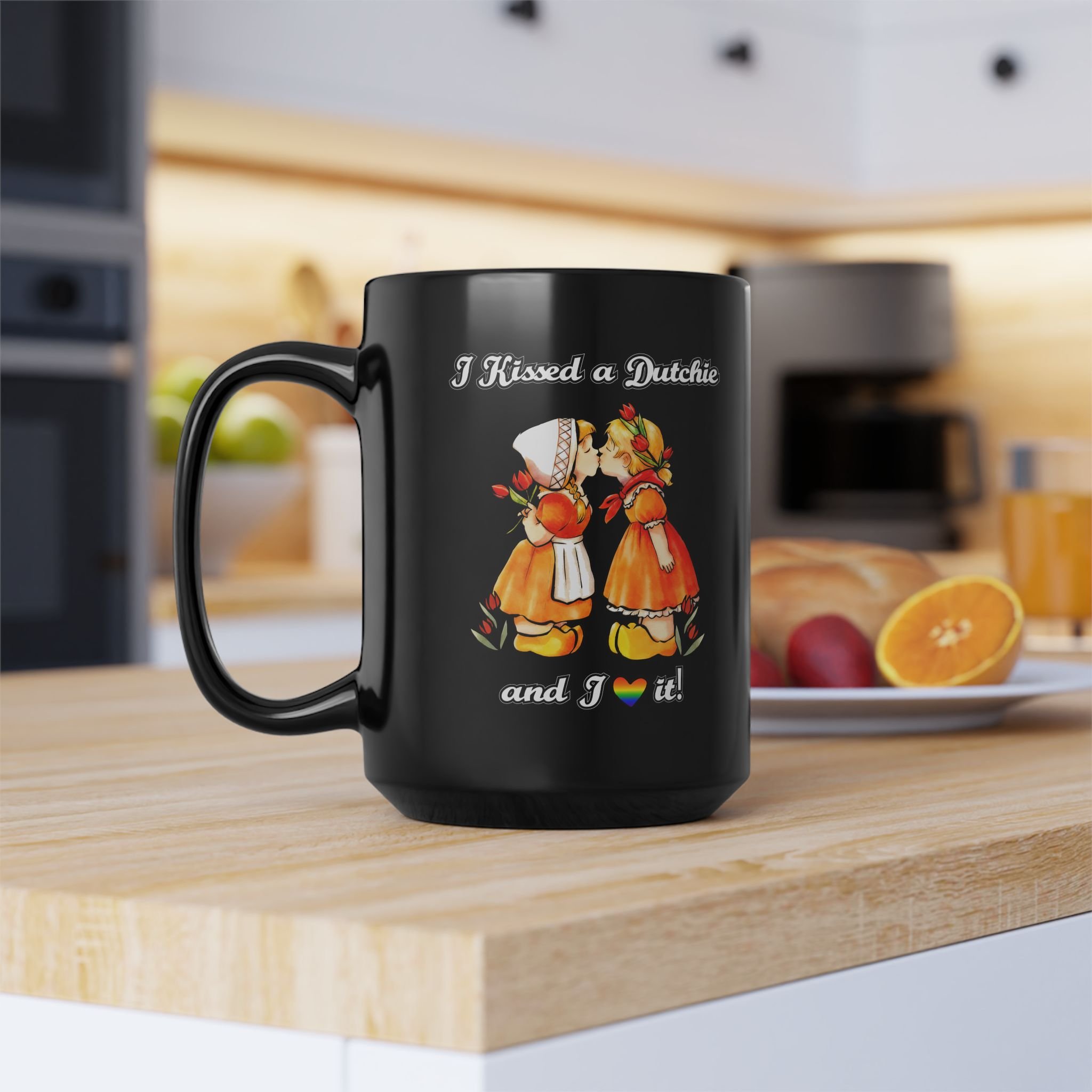
You can find the Dutch kissing couple on Delft Blue figurines, postcards, magnets, mugs and many other souvenirs. But where does this famous Dutch symbol come from, and why has it remained so popular for so many years?
the origin of the DUTCH KISSING COUPLE
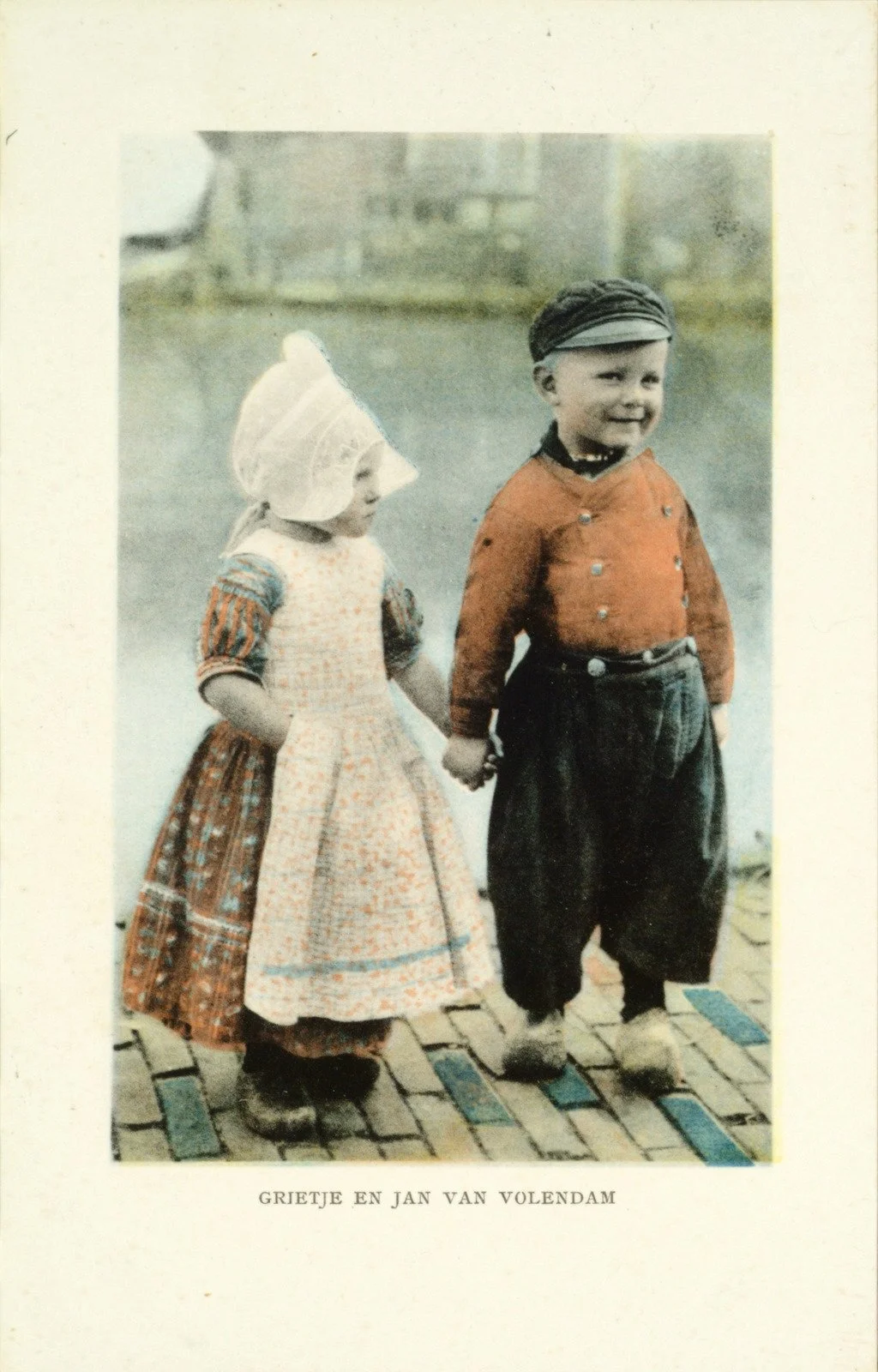
There is surprisingly little information about the exact origins of the Dutch kissing couple. The figures usually represent two young village children wearing traditional Dutch clothing from places such as Volendam and Marken, two historic fishing villages located north of Amsterdam.
Their clothing reflects how people dressed in these communities around the beginning of the twentieth century. The traditional outfits often include wooden clogs, embroidered aprons, waistcoats and distinctive lace headwear. The bright colours, patterns and handmade details showcase the craftsmanship and pride of Dutch village life.
Many people believe the figurines were inspired by a photograph taken around 1920 of two children known as Jan and Grietje in Volendam. In the photograph, the children share a kiss. According to popular stories, a souvenir seller used this image as inspiration for a small figurine, which quickly became popular with both tourists and Dutch people.
In the past, almost every region of the Netherlands had its own traditional costume. The colours, fabrics and designs varied from one area to another. While most kissing couple figurines wear clothing inspired by Volendam, many other regional variations also exist.
Today, people no longer wear these traditional outfits in everyday life. However, they remain an important symbol of Dutch culture, heritage and history. The kissing couple represents a romantic image of old Dutch life, with small villages, windmills, tulip fields and a strong sense of community.
For this reason, the Dutch kissing couple has become one of the most famous cultural symbols of the Netherlands.
THE LARGEST DUTCH KISSING COUPLE IN THE NETHERLANDS
Most people know the Dutch kissing couple as a small Delft Blue figurine standing only a few centimetres tall.
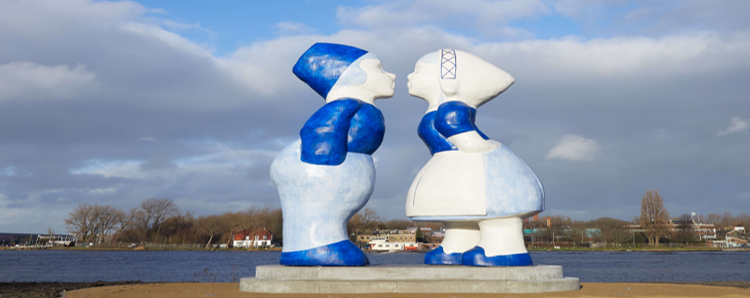
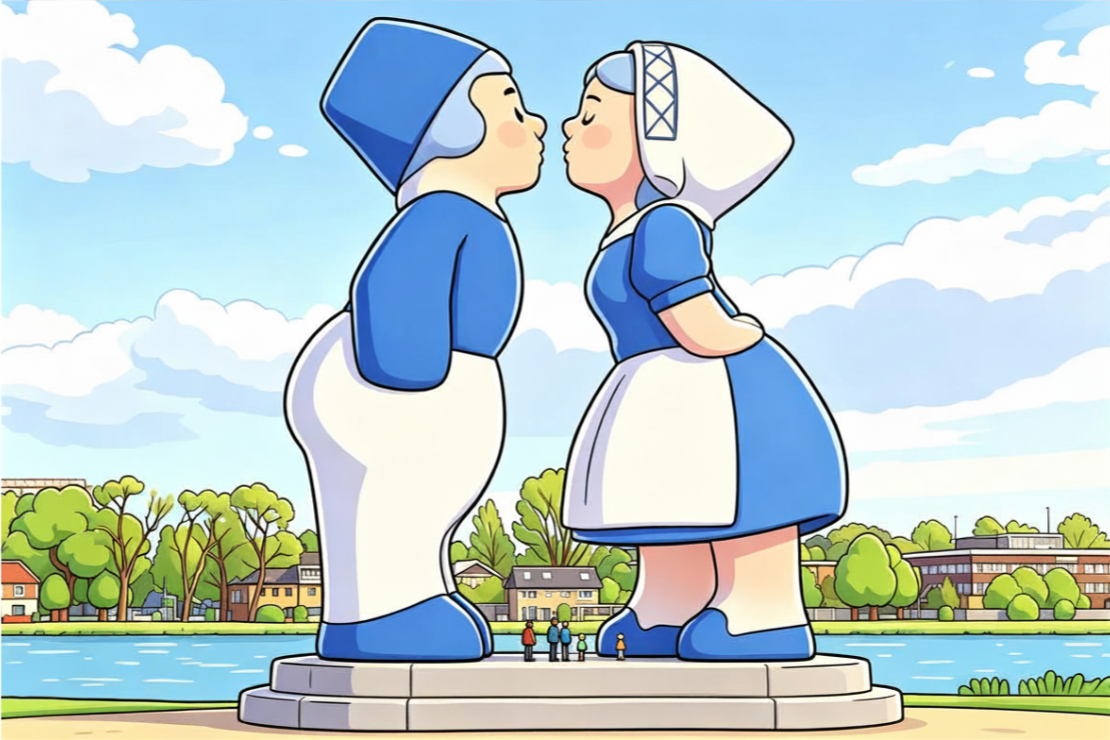
However, in Zaandam you can also find a giant version of the famous couple. This impressive sculpture stands more than nine metres high and weighs over 6,800 kilograms. It can be seen along the cycling route between Sloterdijk and Amsterdam Central Station and has become a popular landmark for visitors.
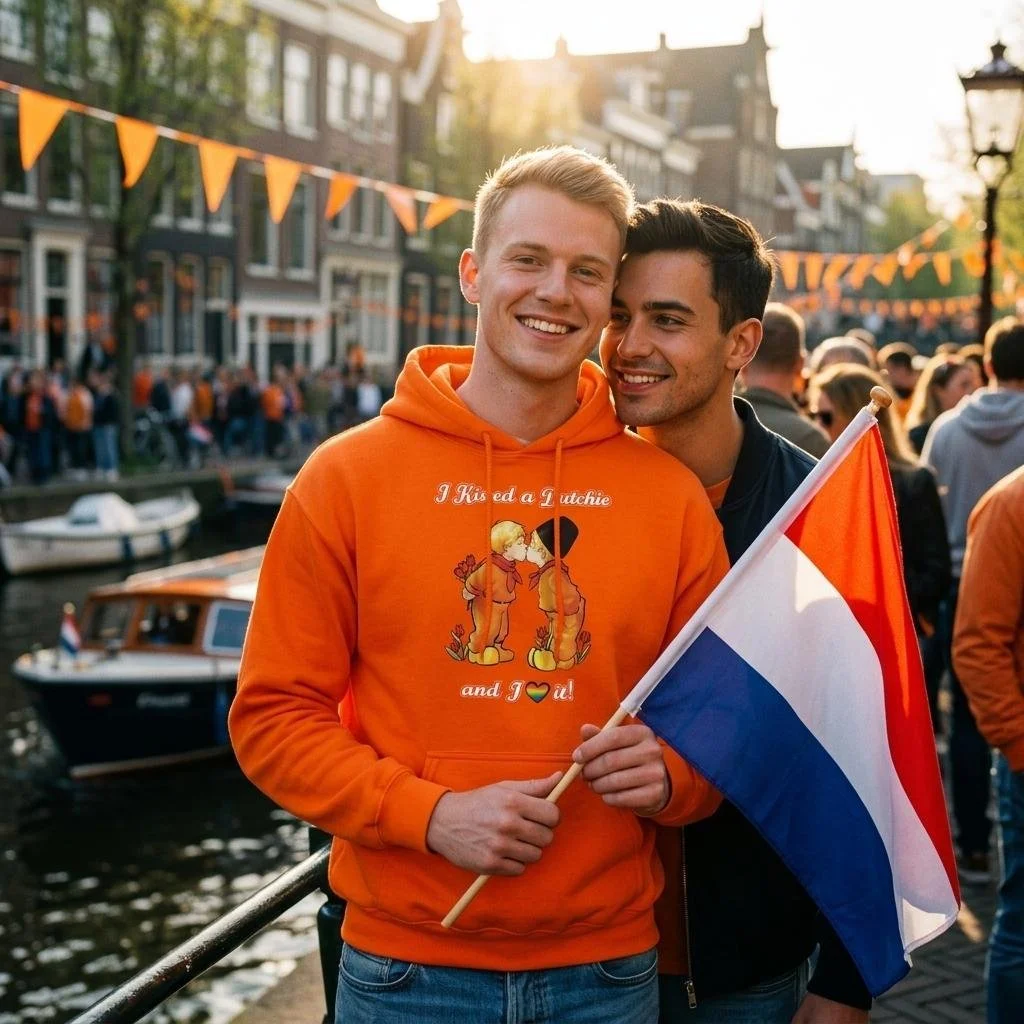
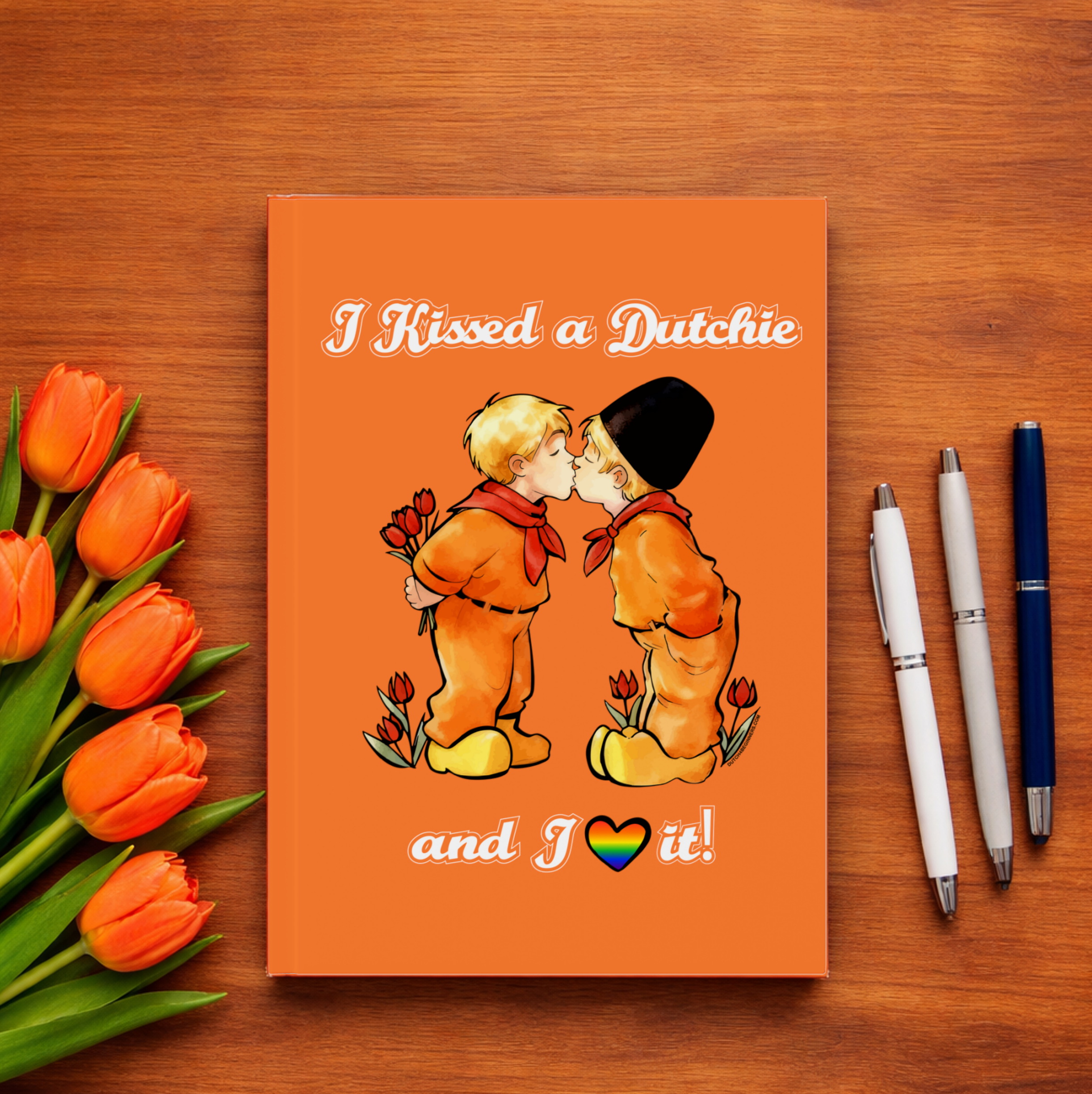
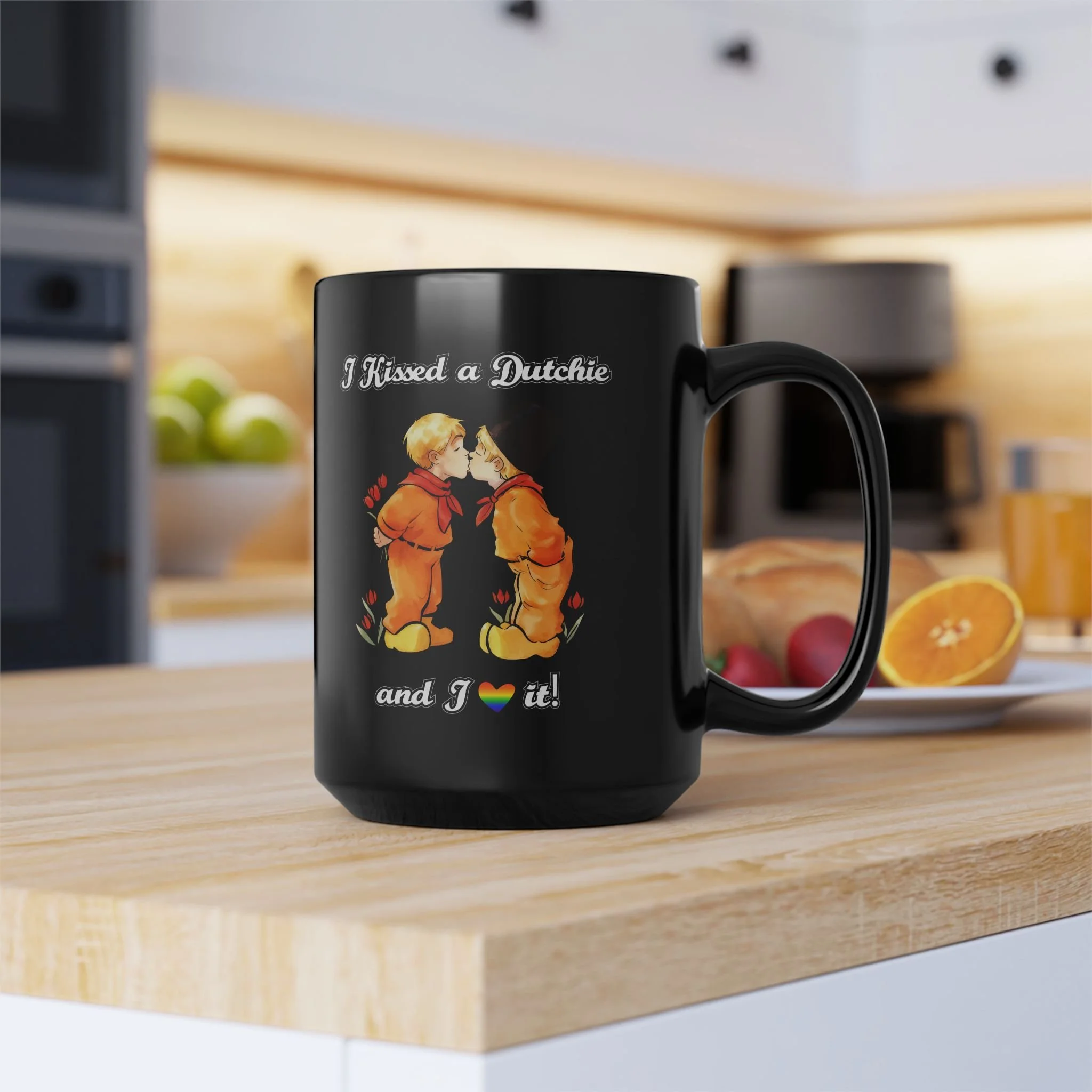
Discover Our “DUTCH Kissing Couple” Collection
The Dutch kissing couple remains one of the most loved symbols of Dutch culture.
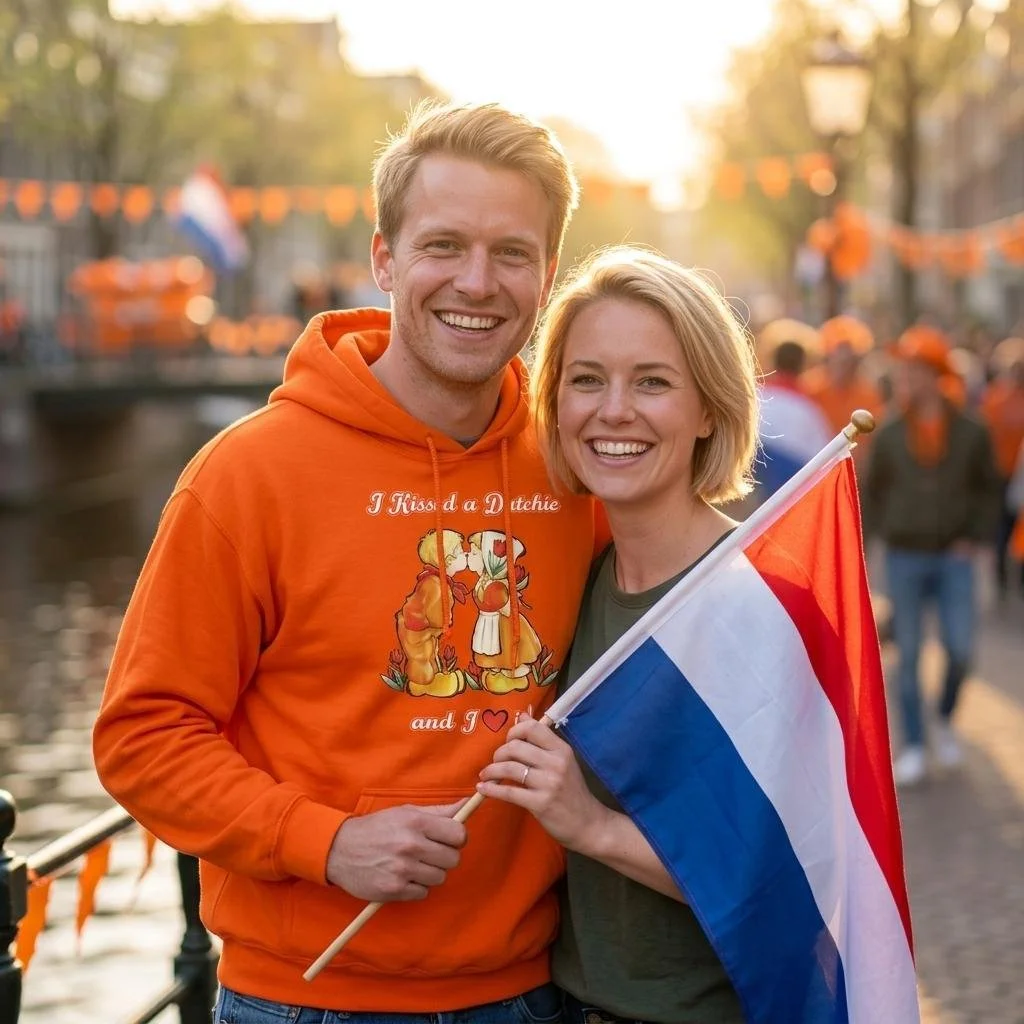
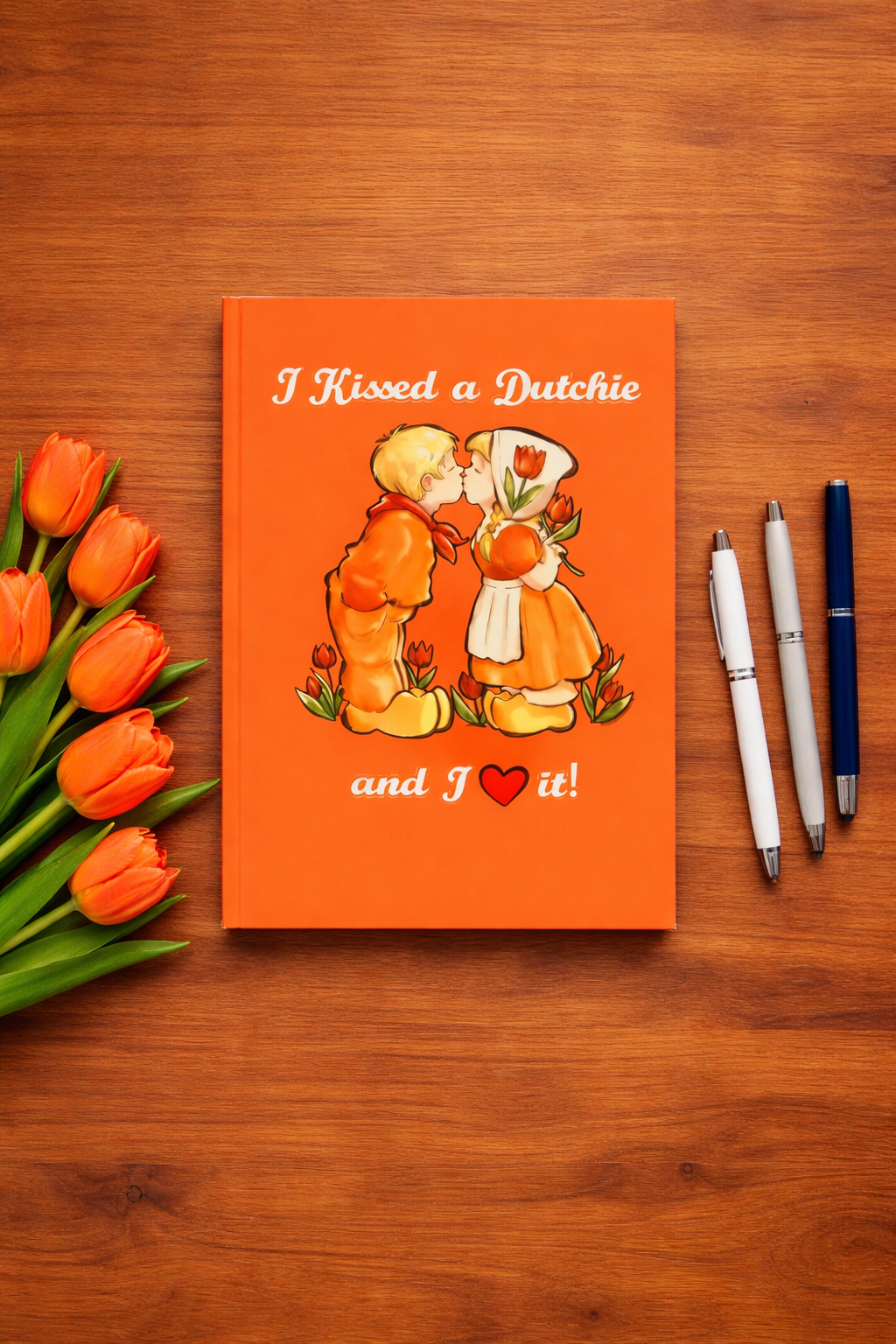
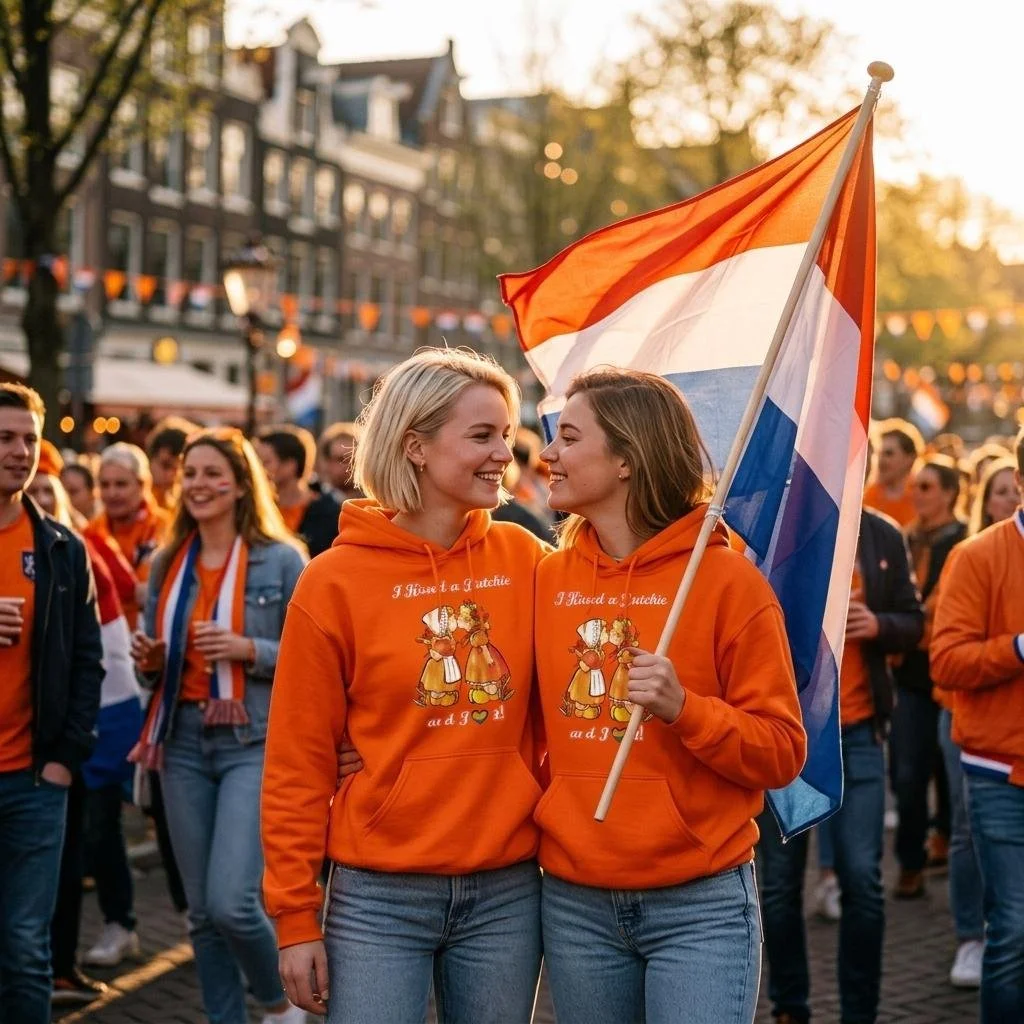
From mugs and hoodies to stationery and unique gifts, our collection celebrates the charm, history and traditions of the Netherlands in a fun and modern way.
Bring a little Dutch culture into your home and discover why this famous couple continues to capture hearts around the world.
Woordenschat
To help you prepare for Sint Maarten it could be beneficial to learn the below words!
Nederlands |
Engels |
| De boer | The farmer |
| De boerin | The farmer (female) |
| Het stelletje | The little couple |
| De klederdracht | The folk costume |
| De afbeelding | The image |
| De oorsprong | The origin |
| Het dorp | The village |
| De visser | The fisherman |
| De gemeenschap | The community |
| De kanten mutsen | The lace hats/caps |
| De geborduurde schorten | The embroided aprons |
| De stof | The fabric |
| De uiting | The expression |
| Het vakmanschap | The craftsmanship |
| De handelaar | The trader |
| De verbeelding | The imagination |
| Het ontwerp | The design |
| Het erfgoed | The heritage |
| De ambacht | The trade |
| Het standbeeld | The statue |
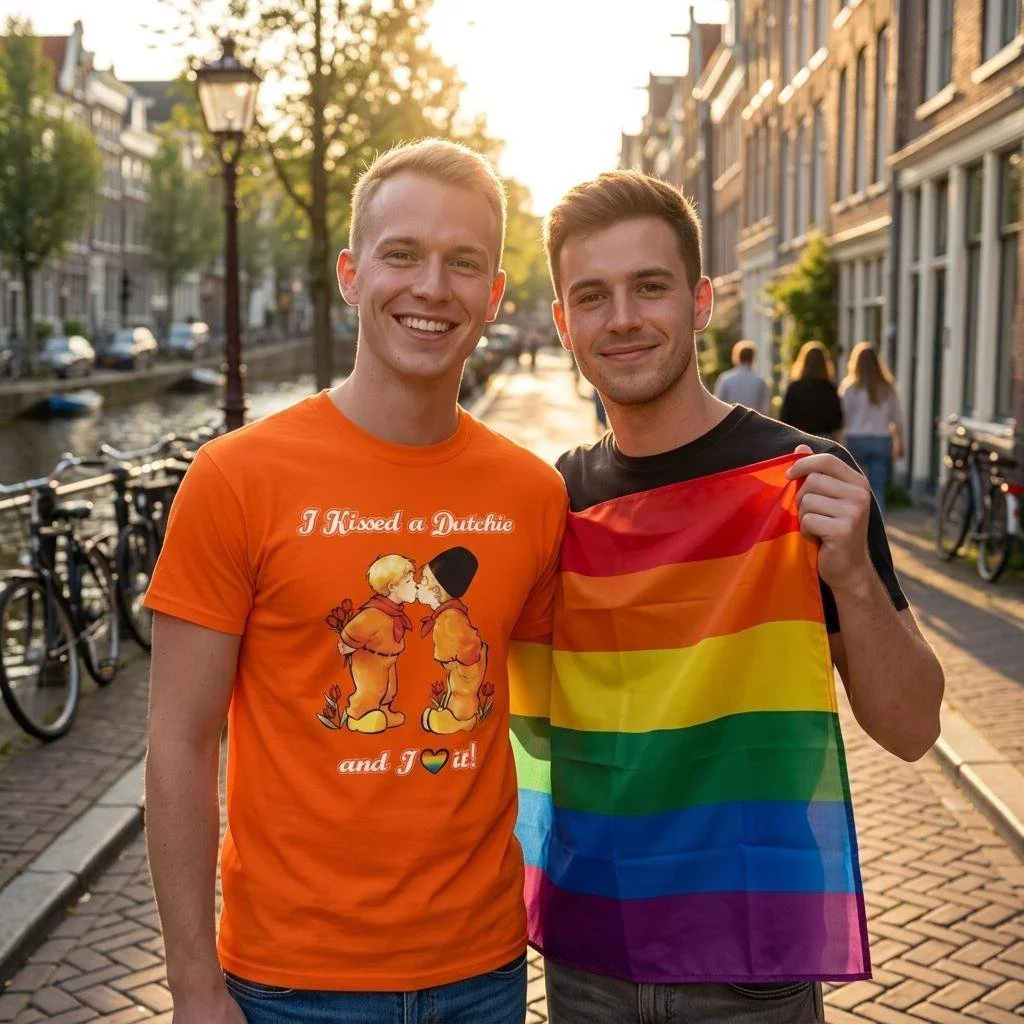
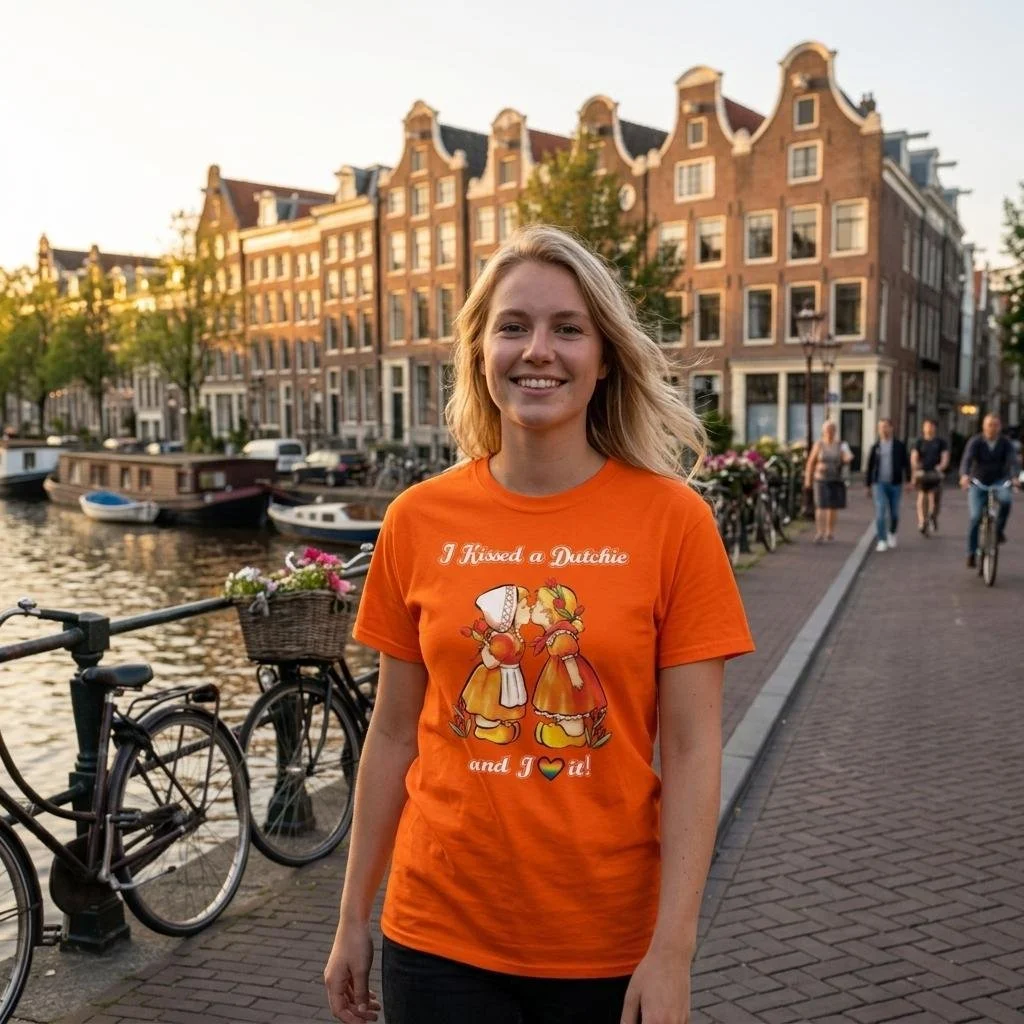
Celebrate love across borders with this cheerful Dutchie Couple Kissing T-Shirt – the perfect international couples tee for Dutch expats and lovers of Dutch culture. Featuring a charming illustration of a Dutch couple sharing a kiss, this vibrant orange Kings Day top makes a bold statement while showcasing your connection to the Netherlands.
Whether you're celebrating King’s Day, Valentine's Day, or simply expressing your love for your Dutch partner, this quirky and romantic tee is an ideal gift idea for couples who want to show off their cross-cultural bond. Made from comfortable, high-quality materials, this Dutchie kissing shirt is perfect for everyday wear or special occasions. The eye-catching design and playful message, "I Kissed a Dutchie, and I Loved It," make it a fun conversation starter and a must-have for Dutch lovers and Dutch culture fans alike.
Show your pride with this adorable expat couple gift, or surprise your partner with a cute Dutch Valentine’s tee that celebrates love across borders.
Product Features:
- High stitch density for smoother print surface
- Durable double-needle collar
- Seamless construction
- Tubular fit to reduce torque (twisting)
- Tear-away label for comfort
- Direct-to-Garment (DTG) printed design
- Solid Colours: 100% ring-spun cotton
- Heather Colours: 35% Cotton, 65% Polyester - Unisex sizing
Care Instructions:
- Machine wash cold (inside out recommended)
- Tumble dry low
- Do not iron directly over the design
- Do not dry clean